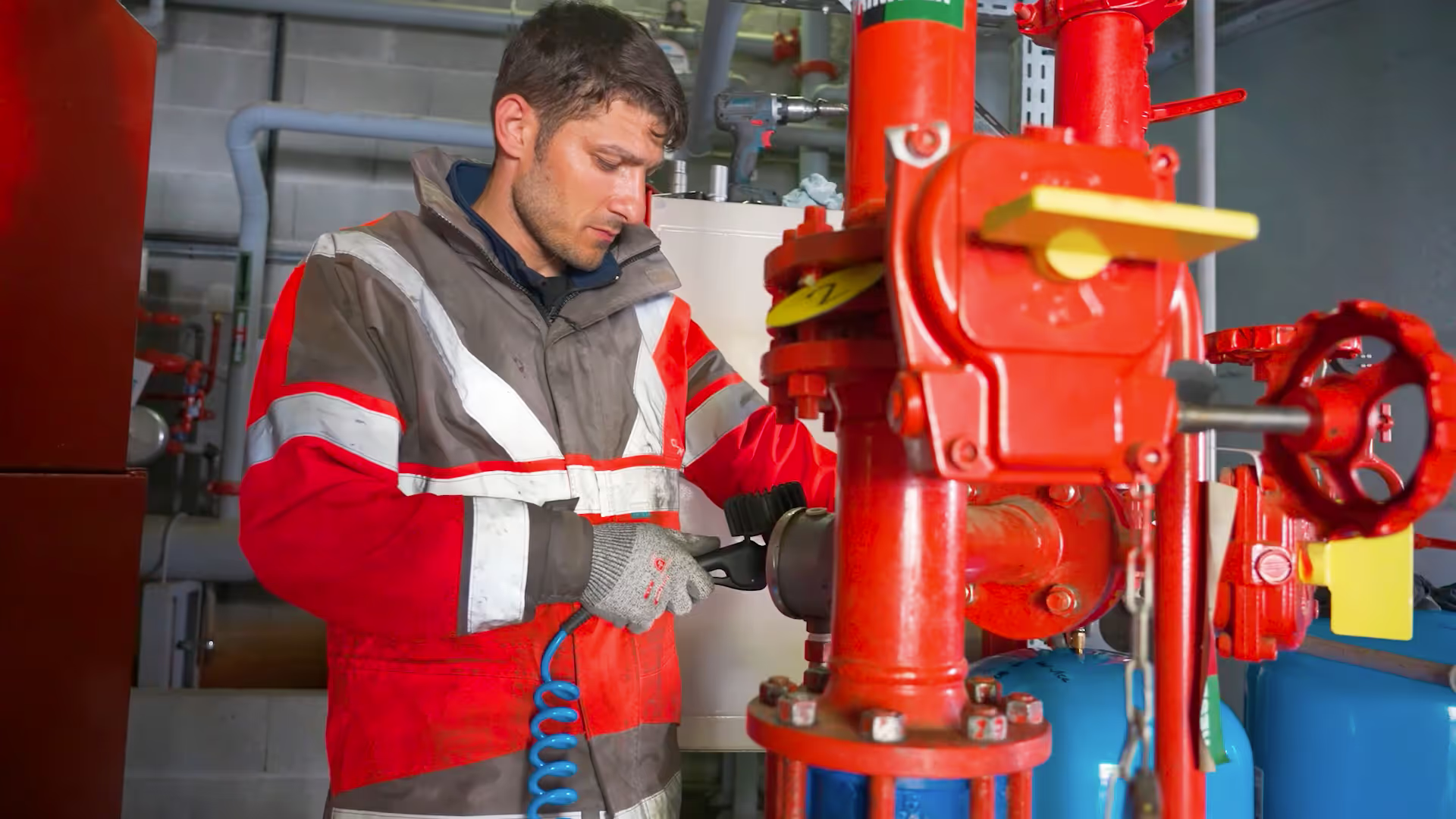
Sprinkler System

In 2016, logistics and industrial warehouses accounted for over 78 million m² in France (source: Commissariat Général au développement durable, Atlas des entrepôts et aires logistiques). A rapidly expanding market exposed to a major risk: fire. To control it as quickly as possible, sprinklers remain the most suitable solution.
Both a fire detector and an automatic extinguisher, the sprinkler is today the primary automatic fire protection system. Often recommended or even mandated by insurers and regulations, the sprinkler system also allows you to significantly reduce your building or warehouse insurance premiums.

Key Benefits

75% of fires are controlled with 5 sprinklers or fewer in operation (less than 50 m²), and 96% of incidents are controlled with fewer than 30 sprinklers.

The system's effectiveness relies on its suitability for the risk to be protected and on the comprehensive protection of all premises. Because it enables early and autonomous action on a nascent fire, it is the preferred fire protection method for establishments with significant human or economic stakes.

It is one of the few fire protection systems that allows for prolonged action without human intervention on an incipient fire, regardless of its origin point within the protected establishment. The system also allows for notifying on-site personnel and alerting emergency services.

Furthermore, adopting sprinkler fire protection is part of an approach to reduce environmental impact, by significantly limiting the amount of water needed for extinguishing and the amount of smoke released during a fire.
Système sprinkleur
Système sprinkleur

Operating Principle

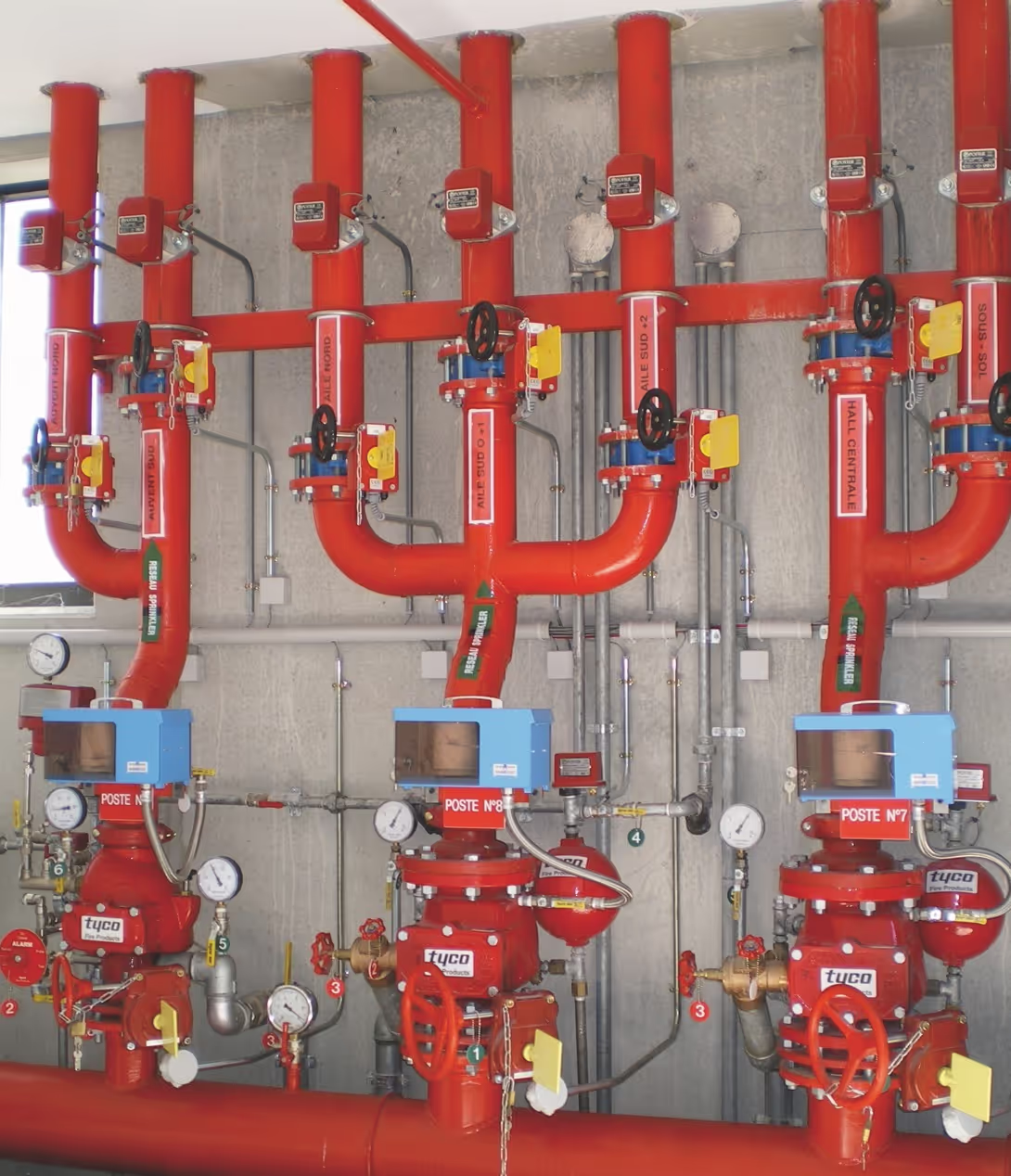
The system is a hydraulic assembly consisting of one or more water sources, one or more control valve stations, and a network of pipes, mostly steel, maintained under permanent water (or air) pressure.

A control valve station is designed to:
  • to sound the alarm and identify the fire's origin zone,
  • to allow systematic monitoring of the system's proper functioning,
  • to perform some of the periodic tests required for system maintenance or verification,
  • to enable the system to be shut down in case of force majeure.
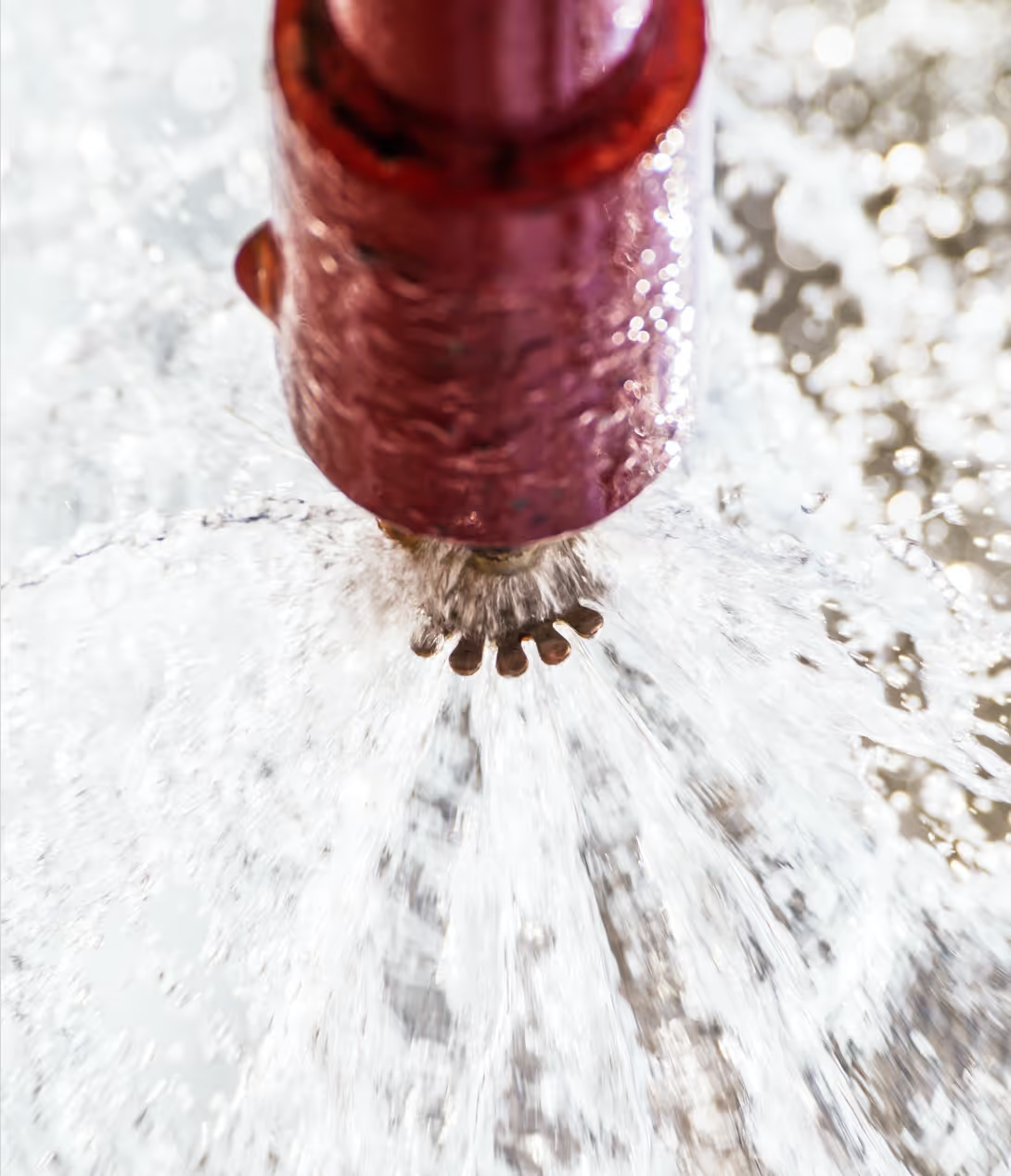
The pipes are equipped with sprinkler heads, installed according to precise rules for spacing and distance from the roof of the protected buildings, and arranged to open, as quickly as possible, under the action of heat. The system's principle is to discharge a quantity of water adapted to the risk over a predetermined area.

A sprinkler head opens due to a rise in temperature. The heat generated by the fire rises to the ceiling. At a certain temperature, the bulb (or fusible link) that keeps the sprinkler head closed bursts and releases water directly over the fire.

Localized, the water discharge is also progressive. If cooling is insufficient, neighboring sprinklers also open and help control the fire. The pressure drop caused by the opening of the first sprinkler triggers the pumps to start in sequence.

Water flowing through the control valve station activates a hydraulic gong and an electrical alarm contact, which signal the alarm. The water discharge is maintained to contain the fire until emergency services intervene and the valves are manually closed.
Good to know

Accidental sprinkler head activations are extremely rare: 1 in 16 million!

Sprinkler system: what you need to know

When the APSAD R1 standard applies, the N1 process must be followed.

Commissioning

After commissioning, a technical inspection is carried out on-site by a third-party organization: the CNPP's "sprinkler control service".
If no reservations are noted, an N1 certificate of conformity is issued. This certificate is then valid for a period of 30 years, provided that:
  • the nature of the protected risk in its products, activities, or premises is not significantly modified;
  • the system is monitored (tests, inspections, and maintenance).

Sprinkler system inspection

An inspection must be carried out every 6 months by a certified company: the objective is to verify that the installation remains adequate and to check the performance level of the water sources. A report of this inspection is issued. A copy must be sent to the insurer.

Maintenance and overhaul

Despite its robustness, a sprinkler system requires rigorous maintenance and monitoring to retain its full effectiveness over time. Weekly tests and checks, as well as preventive, annual, and triennial maintenance, must be carried out by qualified personnel.
Finally, after a period of 30 years following commissioning, a complete overhaul of the sprinkler system must be performed by a certified company.

For an installation following another standard (outside of N1 process)

When other standards apply (NF EN 12845; NF EN 16925; NFPA Fire Codes; FM Datasheet), the initial inspection is carried out either by the insurer or by the inspection body (within the framework of ERP regulations).

In this case, maintenance operations for your sprinkler system should still be performed, although the frequency of tests, inspections, and servicing may vary slightly.

All CLF Satrem teams are trained in the various current standards to design and install sprinkler systems that perfectly meet your specific needs.

For the maintenance of your sprinkler system, trust the CLF Satrem teams.

Your sprinkler system must be regularly maintained and inspected by a certified company. Because safety is priceless, we offer a comprehensive range of services to ensure the proper functioning of your fire suppression systems.
Our maintenance services

Our latest projects

All our projects

Request a quote

Our fire protection experts are available to provide information and answer your questions and quote requests.
Contact us