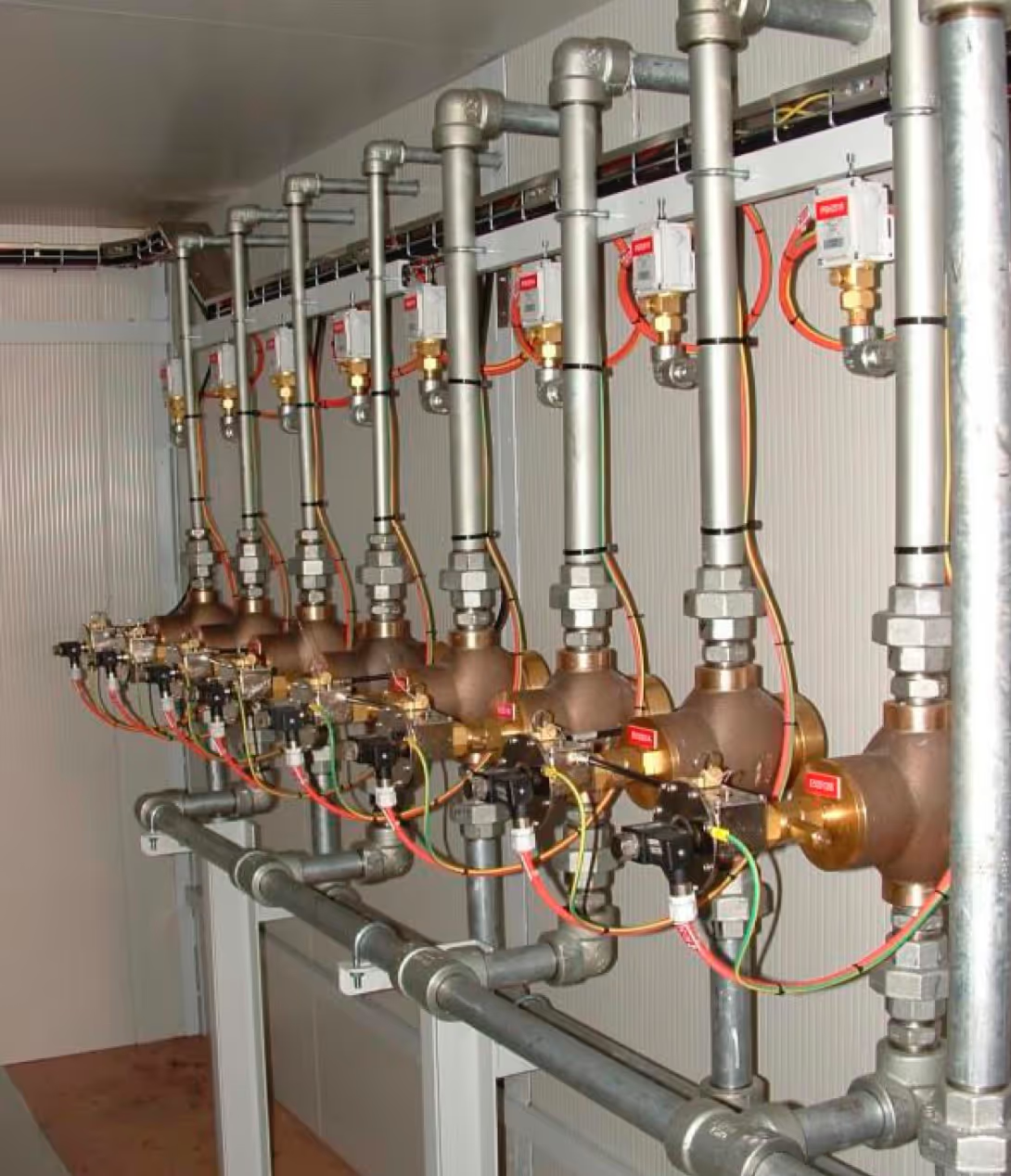
Certain sites, such as industrial production facilities, waste treatment centers, or hazardous product storage areas, require the design of tailor-made fire protection solutions that take into account their special risks. Our CLF Satrem teams have the necessary expertise to implement fire protection systems in sites with specific risks that cannot be solely protected by a sprinkler system.
Our design offices analyze these risks and propose automatic extinguishing solutions aiming, depending on the case, to extinguish or contain the fire until the arrival of emergency services. Depending on the types of risks and areas to be protected, we use various extinguishing agents:
Deluge System

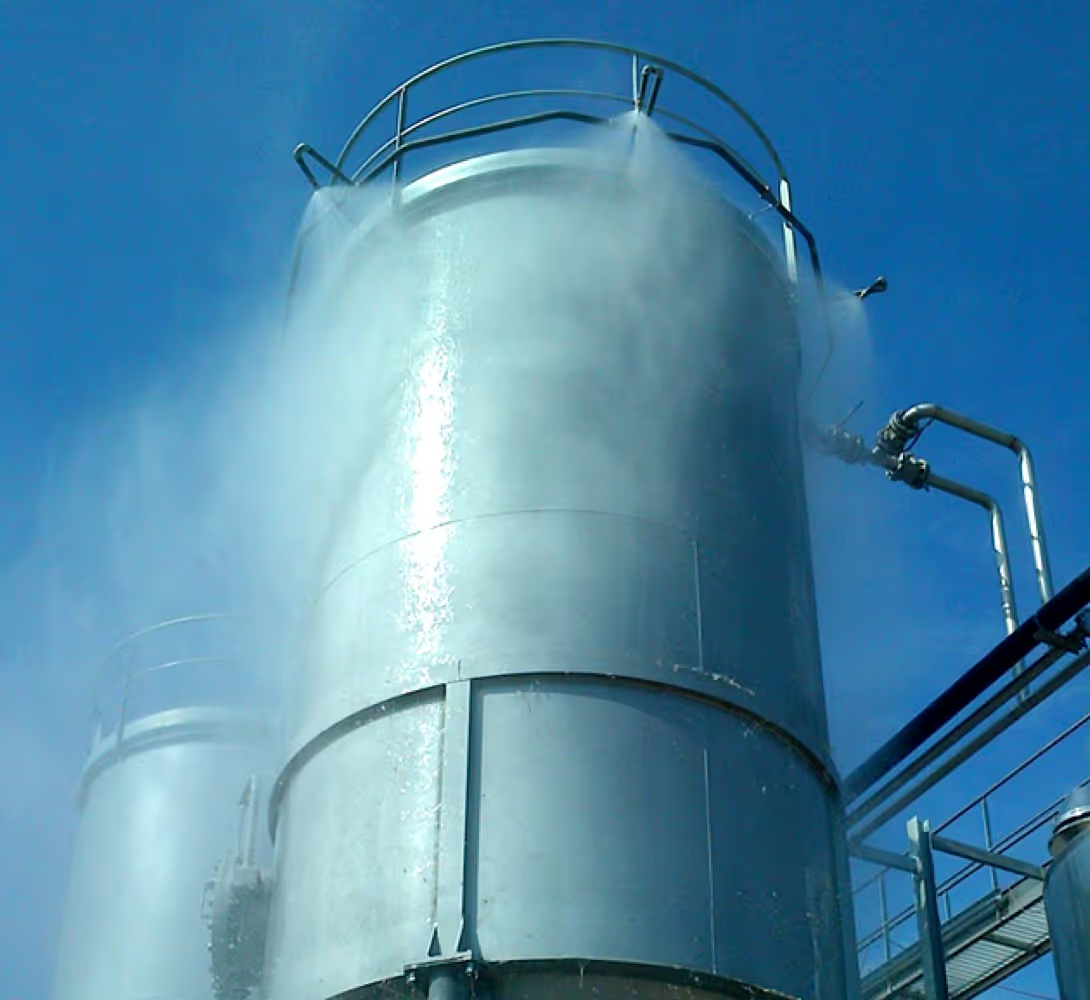
Deluge is an activation mode where all nozzles in an area are simultaneously activated by a mechanical action (pilot line under water or air), electronic action (smoke, flame detection), or manual action.

For high fire risks, it is often necessary to implement cooling systems for structures and equipment to prevent chain thermal reactions.

Furthermore, water curtains or systems to block thermal flows may also be required. In both cases, our teams have the expertise to implement systems using deluge-type fire networks.
Système déluge
Mousse

Foam Systems

Foam systems are mainly of three types: low expansion, medium expansion, and high expansion.


Low expansion is notably used to extend the cooling action of deluge systems (e.g., enhancing the cooling ring around a hydrocarbon storage tank).

Medium Expansion Foam
Medium expansion involves applying a layer of foam, typically onto a flammable liquid (hydrocarbon, oil, etc.), to isolate the burning liquid from oxygen and thus extinguish the fire (e.g., protection of a containment bund).

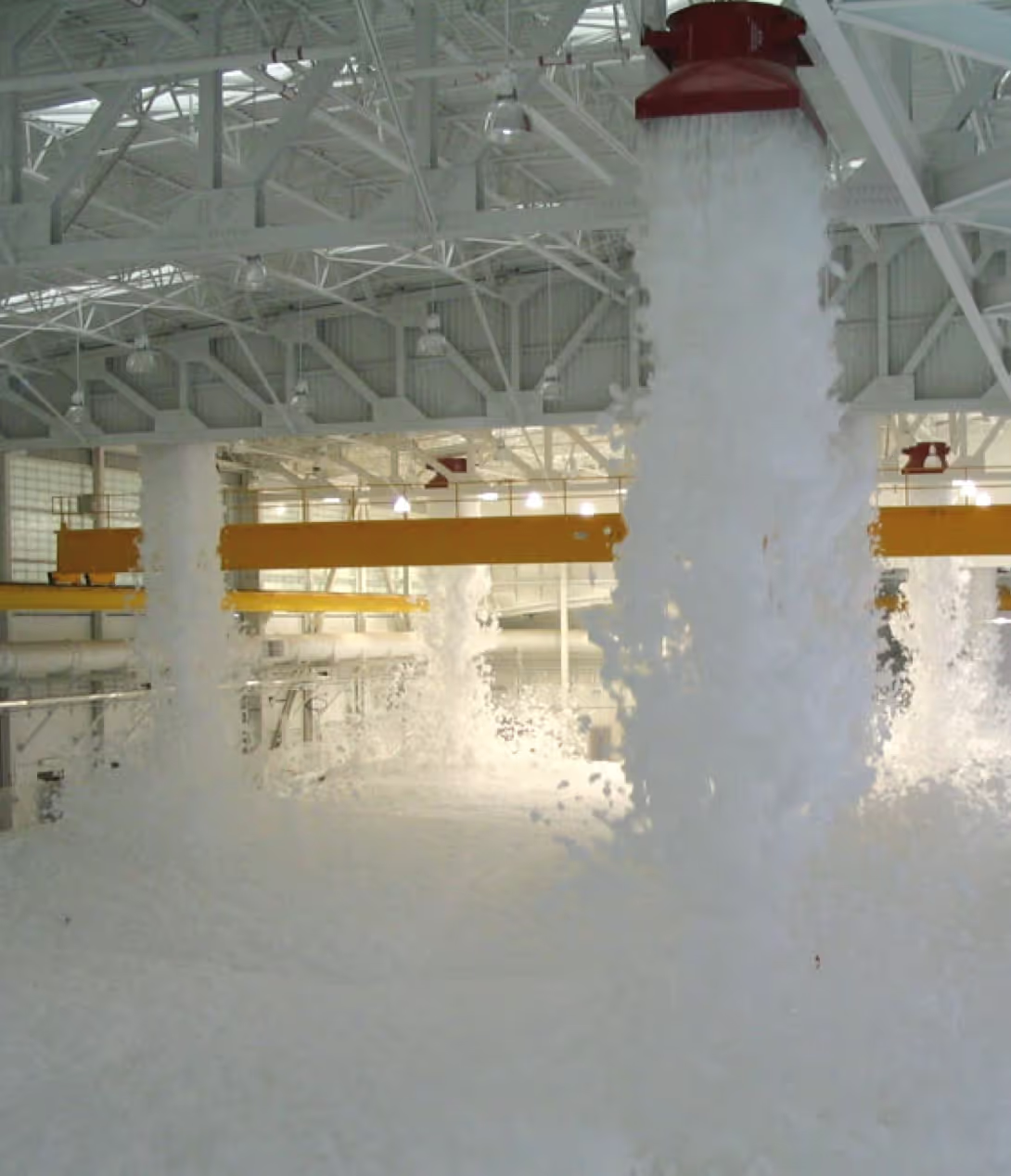
High Expansion Foam
High expansion aims to fill a volume within a given time so that oxygen is displaced and fires on solid materials are thus smothered (e.g., protection of hazardous product storage in a classified warehouse).

Gas Suppression

Inert Gases
Used in various industrial and commercial sectors, inert gases are composed solely of natural gases present in our atmosphere. They extinguish fires by smothering them, reducing oxygen content (generally between 14 and 12%). Once the gases are released, the atmosphere of the protected area is breathable and non-flammable, thus posing no danger.

Inhibiting Extinguishing Agents
Automatic gas extinguishing systems using chemical inhibiting extinguishing agents, substitutes for Halon, act on the mechanisms of chemical reactions that produce the flame without significantly reducing the oxygen content of the air.

They offer additional advantages:
  • easy storage and recharging as these gases are liquid, under atmospheric pressure, and at ambient temperature;
  • non-conductive, they have no effect on electrical equipment;
  • furthermore, some are environmentally friendly.
These systems provide total flooding suppression in enclosed buildings or volumes. They are particularly effective against fires where the energy is primarily contained within the flames:
  • paint shops,
  • laboratories using flammable liquids,
  • electrical and electronic installations such as telecommunication installa-tions or data centers.
Risques spéciaux - Gaz

Good to know

Generally, automatic gas extinguishing systems are not suitable for combating deep-seated fires.

A team of professionals at your service

Expertise

  • Risk assessment and system design in accordance with competent authorities (DREAL, insurers...).
  • Organization of real-world system tests.
  • Design and installation by CLF SATREM of all types of systems.
  • Maintenance of your systems nationwide.
  • Theoretical and practical training for your teams.

Resources

  • Dedicated teams (Project Engineers, Designers, Technicians, Installers).
  • Specific equipment and tools (high pressure, stainless steel).
  • Autocad CAD workstations.
  • Proficiency in "Sprinkcalc" calculation software for conducting and optimizing studies, hydraulic design...  
Discover our expertise

Our latest projects

All our projects

Request a quote

Our fire protection experts are available to provide information and answer your questions and quote requests.
Contact us